
The Short Version
- Mycotoxins are real — they show up in coffee, grains, nuts, wine, spices, and dozens of other foods. Nobody disputes that.
- The levels in coffee aren't dangerous at the amounts anyone actually drinks. A 2021 toxicology risk assessment calculated that an adult would need to drink roughly 410,000 servings in a single sitting to reach the lowest dose ever shown to be lethal in animals, and a 2024 worldwide review concluded coffee's ochratoxin A content doesn't pose a real risk to consumers at normal intake.
- Roasting destroys most of it. Studies put the reduction at roughly 69% to 96% depending on roast level, and the international food-standards bodies put it as high as 65–100%.
- Specialty coffee grading already excludes mold. The SCA permits zero Category 1 defects (which includes mold) in specialty-grade coffee. This system has existed for decades.
- "Mold-free" coffee is a marketing label, not a scientific category. Many of these brands don't publish cupping scores, roast dates, or origin traceability — meaning you may be paying specialty prices for commercial-grade beans with a fear-based label.
- We don't blindly trust journals either. We get into the real problems with scientific publishing further down. But when independent studies across different countries, decades, and funding sources all point the same direction — and what you can see in the industry confirms it — that's a body of evidence, not one interested party's claim.
If you've spent any time in health and wellness circles online, you've probably run into the claim that your coffee is secretly loaded with mold and mycotoxins — invisible poisons sapping your energy, fogging your brain, and slowly wrecking your health.
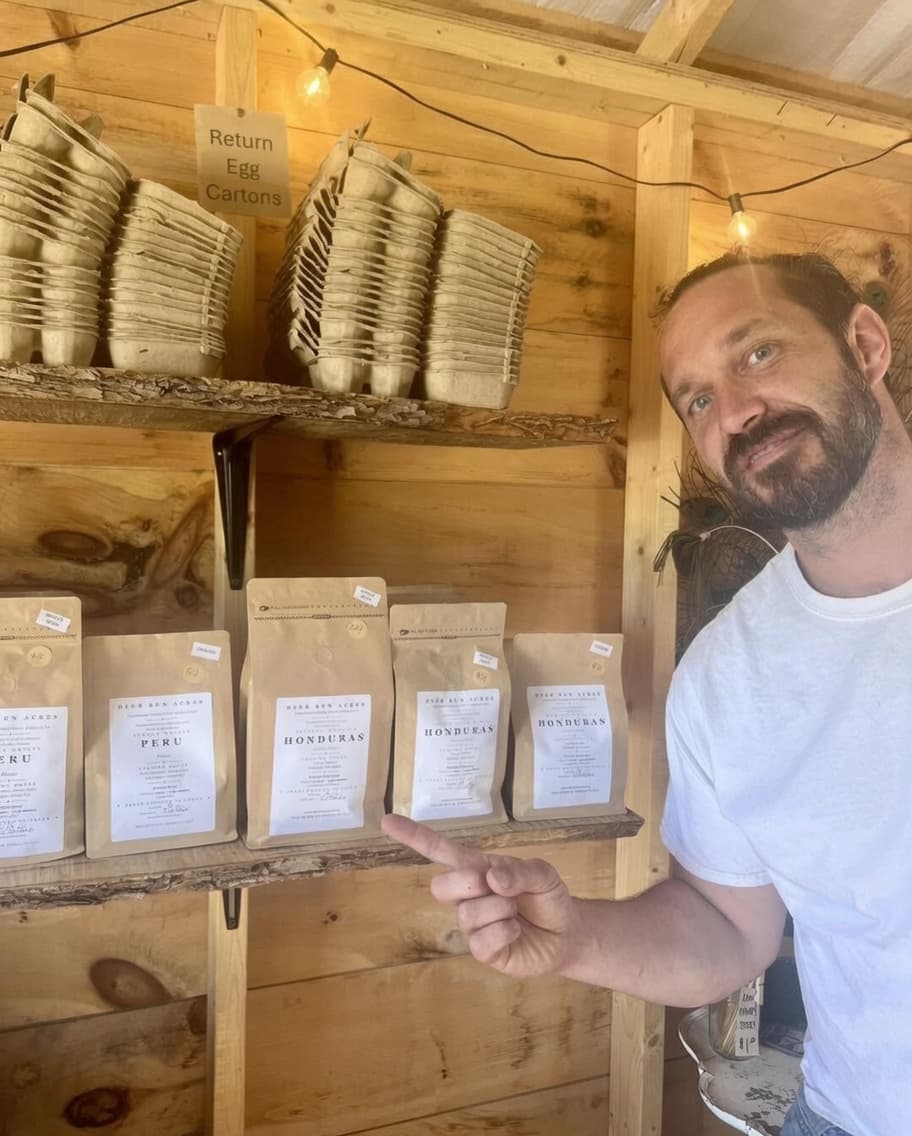
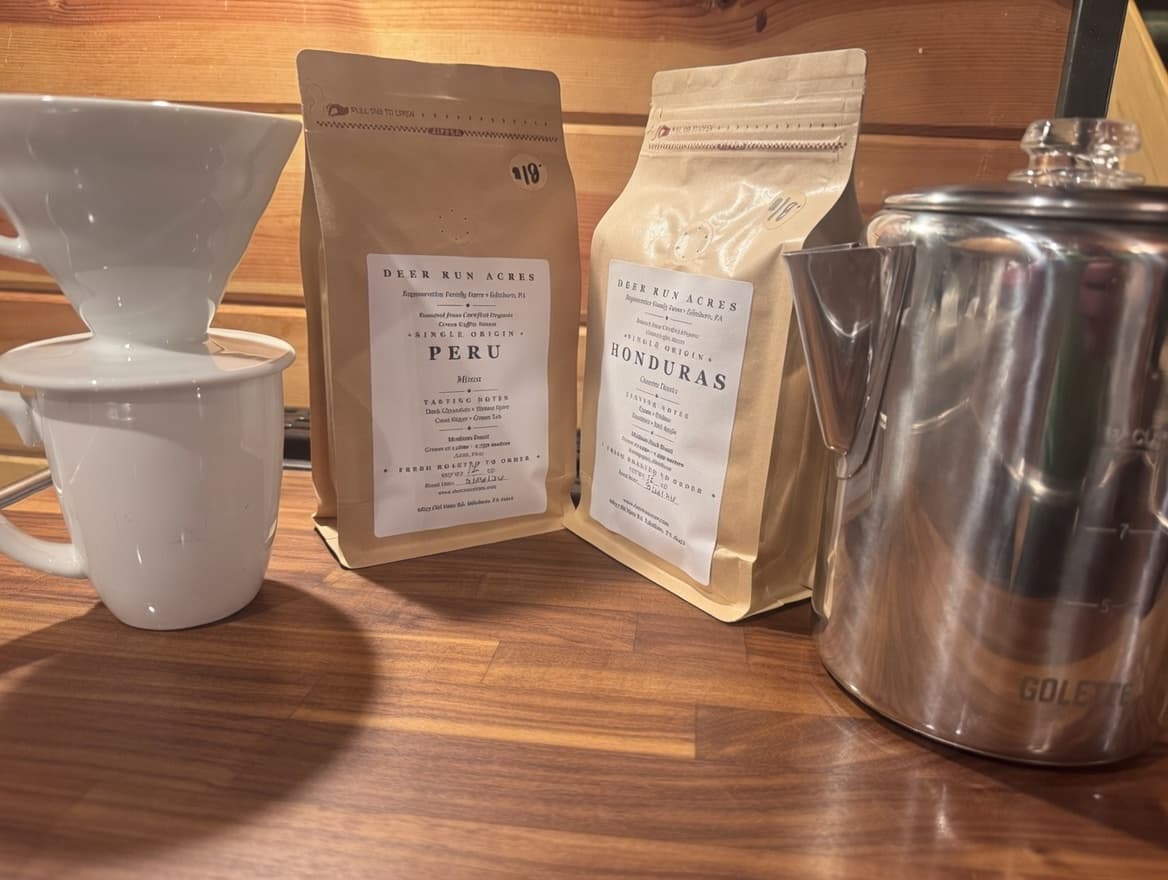
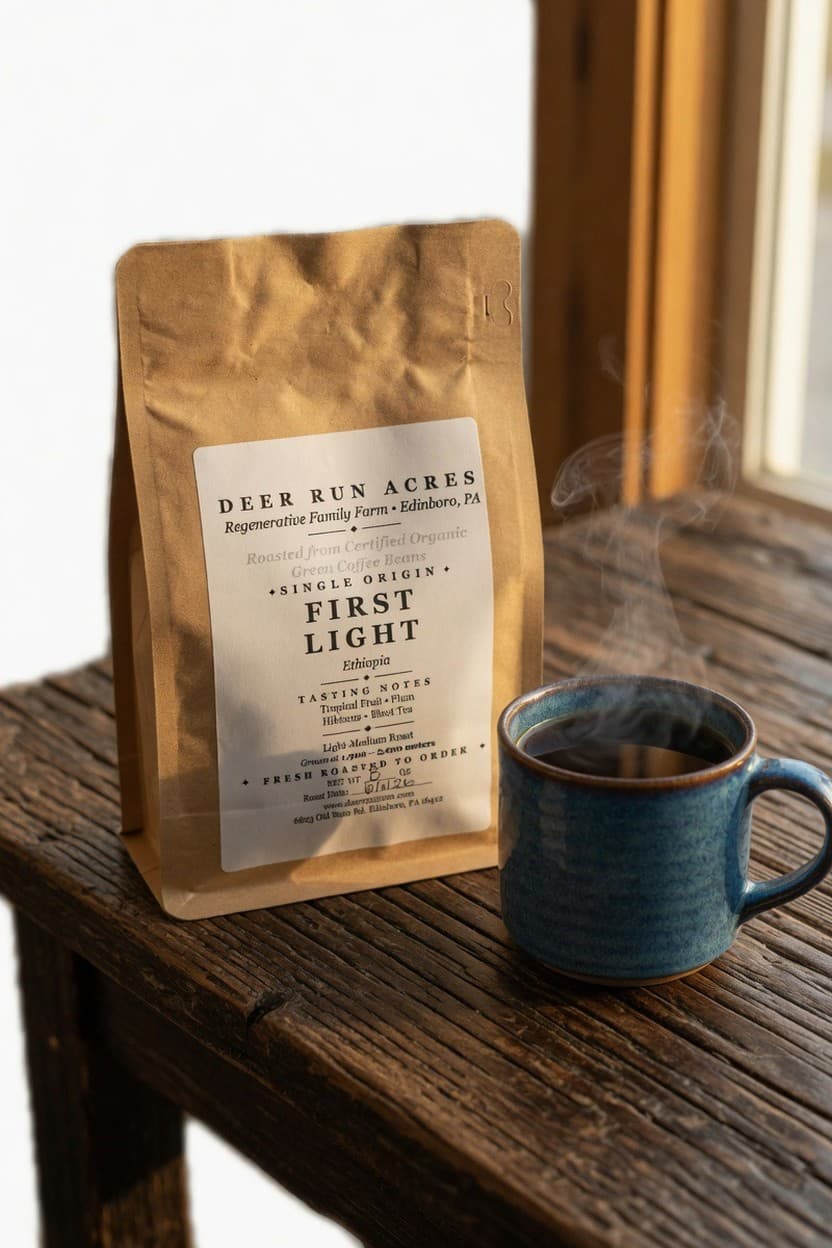
We roast coffee here at Deer Run Acres — a lineup of single-origin coffees and small-batch blends, all certified organic, all specialty-grade, all roasted to order on our farm. And every time we post about our coffee, a wave of well-meaning commenters show up warning us and our customers about "mold in coffee."
So I started digging — not into wellness blogs or influencer podcasts, but into published scientific studies, industry grading standards, and the actual supply-chain mechanics of how coffee gets from a farm to your cup. I also looked at who funded what, because that matters. What I found confirmed what most coffee professionals already know: the "mold in coffee" scare is one of the most successful fear-based marketing campaigns in the food industry.
Here's the full breakdown — including why you should read published research with open eyes, not blind trust.
Yes, Mycotoxins Exist in Coffee. That's Not the Whole Story.
Let's get the honest part out of the way first. Mycotoxins are real. They're toxic compounds produced by certain molds — primarily Aspergillus and Penicillium species — and they can contaminate crops including coffee, grains, nuts, wine, dried fruit, spices, and even some animal products. The two most relevant to coffee are ochratoxin A (OTA) and aflatoxin B1.
Nobody disputes they exist. The question is whether the levels found in coffee are actually dangerous. And the answer, according to decades of published research, is no.
What the Published Research Shows
I'll keep this section brief and link the studies directly so you can read them yourself. I'm not asking you to take my word for it — or theirs. I'm asking you to look at where the evidence points when independent studies, across different countries, funding sources, and decades, all land in the same place.
A 2021 toxicology-based risk assessment published in the Journal of Food Science found large margins of exposure in every scenario it modeled, no historical evidence of acute toxicity from coffee, and concluded that no preventive control is warranted for U.S. coffee manufacturers.[1] That same assessment did the arithmetic on what an actually-dangerous dose would look like: an average adult would need to drink roughly 410,000 servings of coffee in a single sitting to reach the lowest dose ever shown to be lethal in animals.[1]
I'll be straight with you about that study, because this whole article is about not taking claims on faith: it was funded in part by the coffee industry. Normally that's exactly the kind of conflict of interest I'd tell you to be skeptical of — and you should be. But it was published in a peer-reviewed journal with its methods and math laid out in the open, and here's the part that matters: its conclusions line up with a stack of independent, non-industry research that got to the same place by different routes. When an industry-funded study and a dozen studies with no such funding all land together, the agreement is the signal — not the funding.
Here's that independent corroboration. A 1997 European screening study analyzed 633 coffee samples and found that drinking four cups a day comes out to roughly 2% of the safety threshold set by the FAO and WHO.[2] A separate Spanish dietary-exposure assessment landed in the same range, with coffee contributing a low single-digit percentage of the tolerable intake.[3] And a 2024 worldwide systematic review pooling studies across many countries concluded that coffee's OTA content doesn't pose a toxicological concern for consumers at normal intake.[4]
On roasting: multiple peer-reviewed studies show big reductions in OTA. One analysis at espresso-roast parameters documented reductions upward of 90%,[5] while a study of naturally contaminated commercial lots found around 69% under realistic conditions.[6] Taken together, the studies put the range at roughly 69% to 96% depending on roast level and starting load — and the Codex Alimentarius (the international food-standards body from the FAO and WHO) puts the achievable reduction as high as 65–100%.[1] An older but foundational review noted that because findings were so infrequent, the toxin levels so low, and roasting destroyed so much of what was there, further study on the topic was largely set aside.[7]
Every source in this article is linked in the references section at the bottom. Read them.
A Word on Scientific Skepticism — Because It Matters
If you're reading the section above and thinking, "That's great, but I don't automatically trust published studies" — good. Neither do I.
In 2015, Richard Horton, the editor-in-chief of The Lancet — one of the most respected medical journals in the world — published a now-famous editorial in which he wrote:
"The case against science is straightforward: much of the scientific literature, perhaps half, may simply be untrue. Afflicted by studies with small sample sizes, tiny effects, invalid exploratory analyses, and flagrant conflicts of interest, together with an obsession for pursuing fashionable trends of dubious importance, science has taken a turn towards darkness."
Horton went further, criticizing journal editors — himself included — for fueling an obsession with impact factor over truth and for rejecting confirmatory studies in favor of flashy original research. He noted that scientists too often sculpt data to fit the theory they already prefer.
He wasn't alone. Dr. Marcia Angell, who ran the New England Journal of Medicine for two decades, has written that it's no longer possible to believe much of the clinical research that gets published, or to rely on authoritative medical guidelines.[9] Her criticism was aimed mainly at pharmaceutical and clinical-trial research — the corner of science most warped by money — but the problems she names, funding bias and publish-or-perish among them, are worth watching for anywhere.
These aren't fringe voices. These are the people who ran the journals.
So why am I still citing studies in this article?
Because skepticism isn't the same thing as dismissal — and the honest test cuts both ways. Here's the rule I'm actually using, said plainly so you can hold me to it: a claim earns trust when a lot of independent people, with different methods and different reasons to care, keep landing on the same answer — and it stays suspect when it rests on one interested party who won't show their work. That's not a rule I get to point in only one direction. By that same test, if dozens of independent labs had reproduced Dave Asprey's findings about dangerous mold in ordinary coffee, I'd have to take them seriously — funding or no funding. They haven't. The "mold-free" case has never cleared the bar the safety research clears without breaking a sweat.
And the safety research clears it easily. It spans decades and comes from researchers in Spain, Brazil, Mexico, Italy, Switzerland, and the United States, alongside government food-safety agencies (FAO, WHO, EFSA, FDA). The studies use different methods, different samples, and different funding — including plenty with no industry money at all — and they keep landing in the same place: the levels in coffee are far below the thresholds that would actually matter for the people drinking it.
The irony of the "mold in coffee" scare is that it preys on exactly the kind of healthy skepticism Horton was talking about. It takes your justified distrust of institutions and points it — not at better thinking, but at buying a more expensive bag of coffee from someone who also won't show you their data.
The Marketing Machine: How Fear Became a Business Model
So if the science is this clear, why are so many people convinced their coffee is poisoning them?
Because someone figured out how to monetize fear.
The modern "mold in coffee" panic traces directly back to Dave Asprey, the creator of Bulletproof Coffee, who built an entire brand around the claim that regular coffee is "full of performance-robbing mycotoxins" and that his product — sold at a steep premium — was uniquely safe.
Here's what's worth understanding about that claim: Asprey has never published the actual independent lab results that would show his coffee is meaningfully different from any other well-made specialty coffee. He describes a testing methodology, but doesn't release the product-specific results. His "proprietary processing method" isn't patented, and specialty roasters who've looked at it have noted it appears to be standard wet processing — the same method used across the coffee world — though without published details, no one outside the company can say for certain.
Some "mold-free" brands have since started publishing lab panels showing their coffee tests below detection — but that's the tell, not the reassurance. A clean result on properly grown, washed, and roasted specialty coffee is the expected result, not a special one; independent tests of ordinary bags, from the cheapest grocery coffee to the priciest "mold-free" brand, routinely come back the same way. Publishing proof that a non-problem is absent is still marketing a non-problem.
The playbook is simple and effective: take a real scientific concept (mycotoxins exist), strip away the dose-response context (the levels in coffee are negligibly low), create fear (your coffee is making you sick), and then sell the cure (our special coffee is the only safe option). It's a textbook case of manufacturing demand through manufactured fear.
And it's not just one brand anymore. An entire cottage industry of "mold-free" and "mycotoxin-tested" coffee brands has sprung up, most charging $20 to $30 or more per bag. Here's the part that should bother you: many of these brands don't publish cupping scores, don't print roast dates on their bags, and don't offer origin traceability — the basic markers of actual specialty-grade coffee. Which means in a lot of cases you're paying specialty-grade prices for what may very well be commercial-grade coffee with a "mold-free" label slapped on it. The label becomes the value proposition instead of the coffee. A well-sourced, properly stored specialty-grade coffee from a transparent roaster already has mold controls built into the supply chain — and it costs less.
What Actually Protects You: Specialty Coffee Grading
Here's what the "mold-free" marketers don't want you to know: the specialty coffee industry has had rigorous quality controls addressing mold for decades — long before Bulletproof Coffee existed.
The Specialty Coffee Association's (SCA) grading protocol requires a coffee to score 80 or above on a 100-point scale to earn the "specialty" designation. Before any cupping begins, graders physically inspect a 350-gram sample of green beans for defects. Mold is classified as a primary (Category 1) defect, and specialty-grade coffee permits zero Category 1 defects. A single moldy bean in a 350-gram sample is enough to disqualify a coffee from specialty status.[10]
Beyond defect inspection, the SCA standard calls for controlled moisture content, because excess moisture is what creates conditions favorable to mold growth. That's exactly why specialty-grade coffee holds to strict moisture standards — it's been industry practice for years.[11]
Wet processing — the method used for most specialty-grade washed arabica coffees — removes the majority of mold spores during the cherry-to-parchment stage. This isn't a secret proprietary process. It's the standard method used across the specialty coffee supply chain worldwide.
Where Mold Actually Matters
None of this means mold is irrelevant to the coffee industry. It's a real concern in specific situations — just not the ones the marketers are selling you.
Mycotoxin contamination is mostly associated with commodity-grade and loosely regulated local-market coffee — the low-cost, mass-market beans traded on commodity exchanges that make up the bulk of global production. These coffees are often harvested without selectivity, dried in conditions that invite mold growth, stored without adequate climate control, and blended from unknown origins where traceability is impossible.
A 2018 study from Mexico on roasted coffees from local markets found that ordinary postharvest and storage conditions don't guarantee a mycotoxin-free product, and that OTA-producing fungi were present in commercially available roasted coffee from those markets.[12] A 2021 study of coffee from the Caparaó region of Brazil found that while OTA can show up during the drying stage, the specialty-grade coffees in the study — those scoring 80+ under SCA protocol — consistently showed managed mycotoxin levels, which reinforced that proper postharvest handling is the primary control factor.[13]
The solution to mold in coffee was never a proprietary marketing label. It was, and always has been, quality sourcing, proper processing, controlled storage, and rigorous grading — the exact things the specialty coffee industry has been doing for decades.
One Honest Caveat — For the People It Actually Applies To
There's one wrinkle worth being straight about, because I'd rather give you the honest version than sell you around it. Caffeine itself appears to have a mild antifungal effect, and as a result some decaffeinated coffees have been found to run marginally higher in mold compounds than their caffeinated counterparts.[14]
Before anyone panics: the levels are still negligible for essentially everyone, decaf included — the same large safety margins apply. But if you're someone who genuinely reacts to molds or runs unusually sensitive, that's worth knowing, and decaf is the wrong thing to reach for as a "safer" hedge. And if it's caffeine itself that doesn't sit well with you, the honest answer might just be that coffee isn't your drink — not that you need a special, expensive, "detoxified" version of it. I'd rather tell you that straight than sell you a workaround.
What We Do at Deer Run Acres
We're a small family farm. We roast on an RK Drum setup and profile every roast with Roast Pilot software. We're not a large operation, and we don't pretend to be. But we take quality seriously, because quality is the whole point.
Our single-origin coffees and blends are specialty-grade, certified organic, with full traceability to origin. Every lot we buy meets SCA grading standards. The beans are wet-processed. They're stored properly. And we roast to order, so our coffee doesn't sit in a warehouse for months before it reaches your cup.
We don't market our coffee as "mold-free," because that framing is dishonest at its root. It implies other coffee is dangerous and ours is uniquely safe. The science doesn't support that distinction for any properly sourced specialty coffee. What we do instead is focus on what actually matters: origin quality, roast freshness, traceable sourcing, and certified organic beans. No gimmicks.
"The simple believes everything, but the prudent gives thought to his steps."
The Bottom Line
Mycotoxins are a real scientific concept. Their presence in coffee at trace levels is documented and uncontested. But the claim that your coffee is making you sick, that you need special "mold-free" beans, and that the companies selling them have discovered something the rest of the industry hasn't — that's marketing, not science.
Peer-reviewed research consistently shows that mycotoxin levels in coffee are far below established safety thresholds. Roasting destroys most of the ochratoxin A that's there. Specialty coffee grading has excluded moldy beans for decades. And multiple risk assessments — including a 2021 Journal of Food Science study and a 2024 worldwide systematic review — have concluded that coffee doesn't pose a mycotoxin-related health risk to consumers at normal intake.
If you want to minimize any possible exposure, here's what actually matters: buy specialty-grade coffee (an SCA 80+ score), buy from a roaster who knows their sourcing, buy fresh, and store it properly in a cool, dry place. That's it.
Everything else is someone trying to sell you a solution to a problem that doesn't exist.
References
- Heintz et al. (2021), "Assessing the food safety risk of ochratoxin A in coffee," Journal of Food Science — PubMed 34642959 (source of both the risk-assessment conclusion and the ~410,000-servings figure; industry-funded, peer-reviewed).pubmed.ncbi.nlm.nih.gov/34642959
- van der Stegen et al. (1997), "Screening of European coffee final products for occurrence of ochratoxin A," Food Additives & Contaminants — PubMed 9135718.pubmed.ncbi.nlm.nih.gov/9135718
- Coronel et al. (2012), "Exposure assessment to ochratoxin A in Catalonia (Spain)," Food and Chemical Toxicology — PubMed 22394208 (DOI 10.1016/j.fct.2012.02.023).pubmed.ncbi.nlm.nih.gov/22394208
- Massahi et al. (2024), worldwide systematic review of ochratoxin A in coffee, Food Additives & Contaminants: Part A — PubMed 39259858.pubmed.ncbi.nlm.nih.gov/39259858
- Romani et al. (2003), "Influence of roasting levels on ochratoxin A content in coffee," Journal of Agricultural and Food Chemistry — PubMed 12903986.pubmed.ncbi.nlm.nih.gov/12903986
- van der Stegen et al. (2001), "Effect of roasting conditions on reduction of ochratoxin A in coffee," Food Additives & Contaminants — PubMed 11600012 (DOI 10.1080/02652030110047599).pubmed.ncbi.nlm.nih.gov/11600012
- Levi (1980), "Mycotoxins in coffee," Journal of the AOAC — PubMed 7451391.pubmed.ncbi.nlm.nih.gov/7451391
- Horton (2015), "Offline: What is medicine's 5 sigma?", The Lancet — thelancet.com.thelancet.com — What is medicine's 5 sigma?
- Angell (2009), "Drug Companies & Doctors: A Story of Corruption," The New York Review of Books.nybooks.com
- Specialty Coffee Association — Green Arabica Coffee Classification & Cupping Protocols — sca.coffee.sca.coffee
- FAO/United Nations — "Green Coffee Classification and Grading."fao.org
- Casas-Junco et al. (2018), "Determination of potentially mycotoxigenic fungi in coffee (Coffea arabica L.) from Nayarit," Food Science and Biotechnology — PMC6049681.pmc.ncbi.nlm.nih.gov/PMC6049681
- Costa da Silva et al. (2021), ochratoxin A in specialty coffees from Caparaó, Brazil — PubMed 34372751.pubmed.ncbi.nlm.nih.gov/34372751
- Soliman et al. (2002), "Incidence, level, and behavior of aflatoxins during coffee bean roasting and decaffeination," Journal of Agricultural and Food Chemistry — PubMed 12452679 (DOI 10.1021/jf011338v).pubmed.ncbi.nlm.nih.gov/12452679
Caleb Schenk
Owner and farmer at Deer Run Acres, a regenerative family farm in Edinboro, PA producing the healthiest food through sustainable practices.