
Our Farming Philosophy
Regenerative Agriculture
At Deer Run Acres, we view our animals as part of an ecosystem — not commodities. We practice regenerative land management that mimics the natural herd movements of grasslands, building soil, sequestering carbon, and producing the healthiest food possible.
As stewards of the land, we don't want to just be sustainable — we want to be regenerative.
What Is Regenerative Agriculture?
Regenerative agriculture goes beyond sustainability. Rather than simply maintaining the land as it is, regenerative practices actively improve the health of the soil, water, and ecosystems with each passing year.
It begins with a simple idea: work with nature, not against it. By mimicking the natural movement of large herbivore herds across grasslands — the same patterns that built the deep, rich soils of the Great Plains — we can rebuild topsoil, increase fertility, and grow more grass with each season.
The result is a self-reinforcing cycle: healthier soil grows more nutritious grass, which feeds healthier animals, which produce better food for your family — all while healing the land beneath our feet.
Core Principles
Every decision on our farm is guided by these regenerative principles.
Rotational Grazing
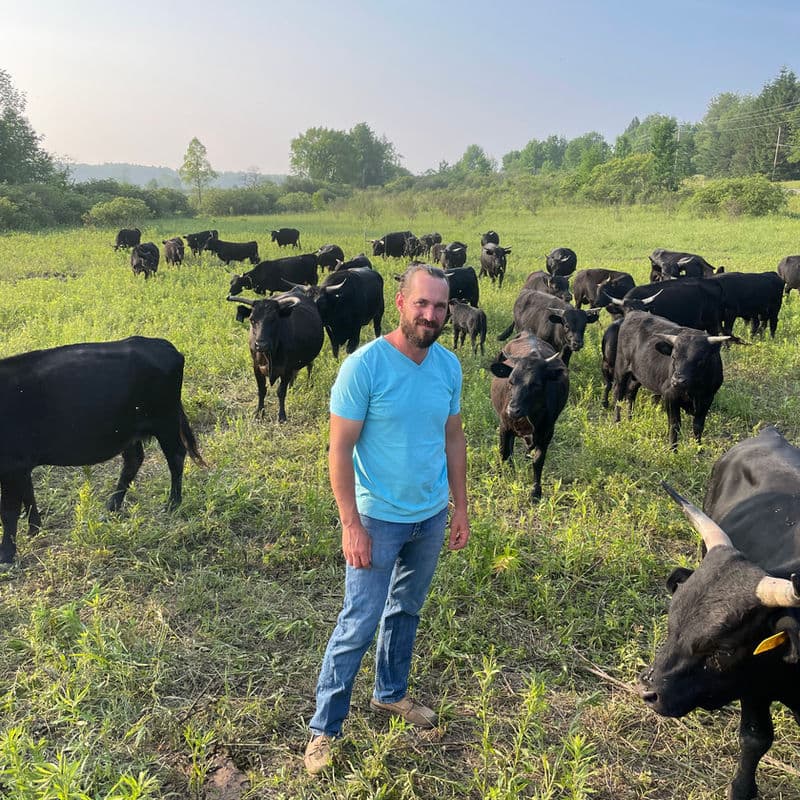
We move our herd frequently across paddocks, mimicking natural herd movements. This prevents overgrazing, allows pastures to fully recover, and stimulates deep root growth in grasses.
Building Topsoil
Healthy, managed grasslands build new topsoil every year. Our rotational system increases organic matter, creating deeper, more fertile soil with each grazing cycle.
Carbon Sequestration
Well-managed grasslands are powerful carbon sinks. Deep-rooted perennial grasses capture atmospheric carbon and store it in the soil — fighting climate change from the ground up.
Biodiversity
Our pastures teem with life — from dung beetles processing manure and earthworms aerating soil, to birds eating harmful insects and beneficial microorganisms building soil fertility.
Water Cycle
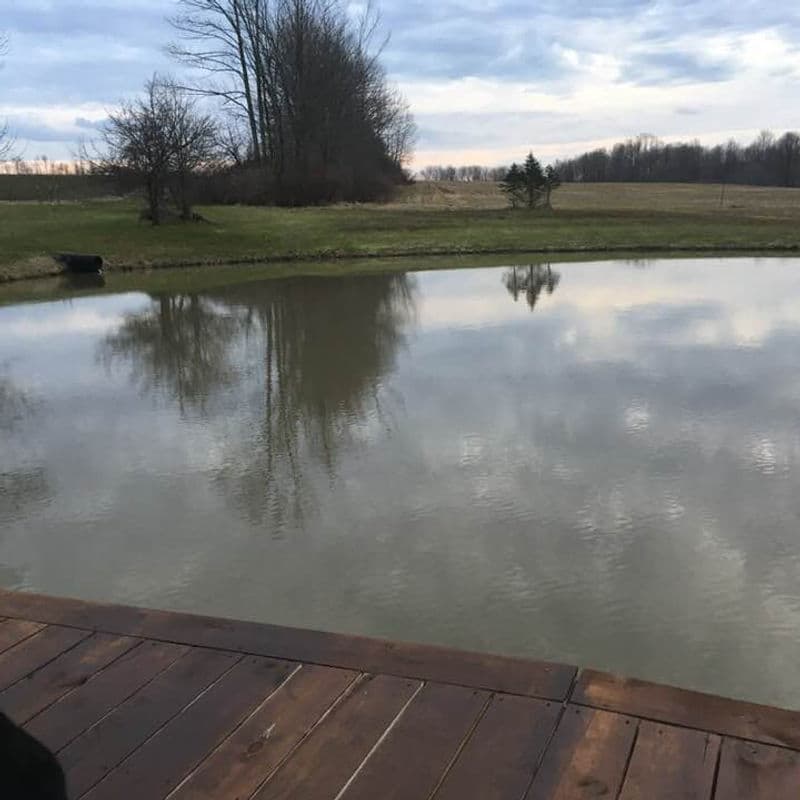
Healthy soil acts like a sponge, absorbing and retaining water. This reduces flooding during heavy rain, provides drought resistance, and improves water quality across the watershed.
No Synthetic Inputs
We use only sun, soil, rain, and natural herd movements to grow our grass. No chemical fertilizers, no herbicides, no pesticides — just the way nature intended.

Moving the Herd, Healing the Land
In nature, large herds of herbivores move constantly across grasslands — grazing intensively in one area before moving on, not returning for weeks or months. This pattern is what originally built the deep, rich topsoils across the world's great grasslands.
We replicate this natural pattern using portable electric fencing, moving our cattle to fresh pasture regularly. After grazing, each paddock gets an extended rest period where grasses recover, roots grow deeper, and soil biology flourishes.
The Cycle of Improvement
- 1.Cattle graze a paddock intensively, trampling old growth into the soil
- 2.Herd moves to fresh pasture — previous paddock begins long rest
- 3.Grass regrows deeper and thicker, building organic matter in the soil
- 4.Each cycle increases fertility — more grass, healthier soil, larger herd capacity
Every Animal Plays a Role
On a regenerative farm, animals are not raised in isolation — they are part of an interconnected ecosystem where every species contributes to the health of the whole.
Cattle
Our 100% grass-fed herd is the engine of regeneration — their grazing and trampling stimulates grass growth, distributes seeds, and fertilizes the soil naturally.
Pigs
Our pasture-raised pigs root through the soil, naturally tilling and aerating it while consuming pests and turning organic matter into rich compost.
Poultry
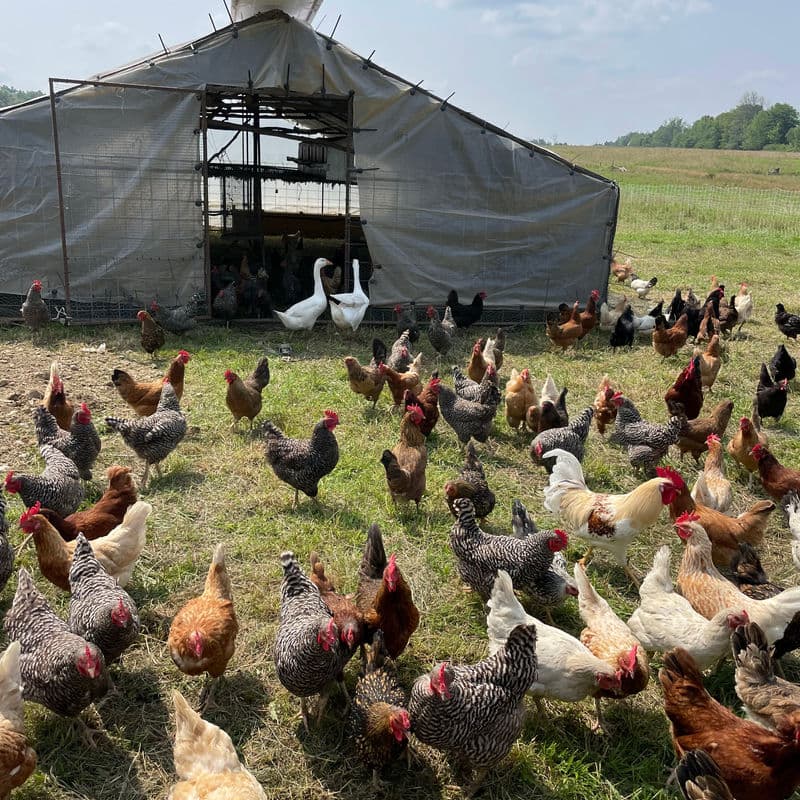
Our free-range chickens follow behind the cattle, scratching through manure to eat fly larvae and parasites — natural pest control that breaks disease cycles.
Soil Biology
Beneath the surface, dung beetles process manure, earthworms build soil structure, and billions of microorganisms create the living foundation that makes it all work.


The Foundation: Living Soil
Everything starts with the soil. Beneath every acre of well-managed pasture is a hidden world of microscopic creatures — bacteria, fungi, protozoa — that form the foundation of a healthy ecosystem.
Our management practices feed this underground ecosystem, building soil organic matter that acts like a sponge — absorbing rainfall, reducing runoff, preventing flooding, and providing drought resistance during dry spells.
Each 1%
increase in soil organic matter allows soil to hold 20,000 additional gallons of water per acre
Deeper
root systems from rotational grazing access nutrients and water unavailable to shallow-rooted plants
Topsoil
is built year over year — reversing decades of degradation from conventional farming
Cleaner
water leaves our farm as healthy soil filters runoff naturally
Fighting Climate Change from the Ground Up
Regenerative grazing is one of the most promising tools for drawing carbon out of the atmosphere and storing it safely in the soil.
How It Works
When cattle graze a pasture and move on, the grass responds by shedding a portion of its root mass. These dead roots decompose deep underground, locking carbon into the soil as stable organic matter.
As the grass regrows, it pulls new carbon from the atmosphere through photosynthesis — and the cycle repeats. Each grazing rotation deposits more carbon deeper into the soil profile.
Unlike conventional farming that releases soil carbon through tillage, our no-till perennial pastures continuously accumulate carbon year after year.
Conventional vs. Regenerative

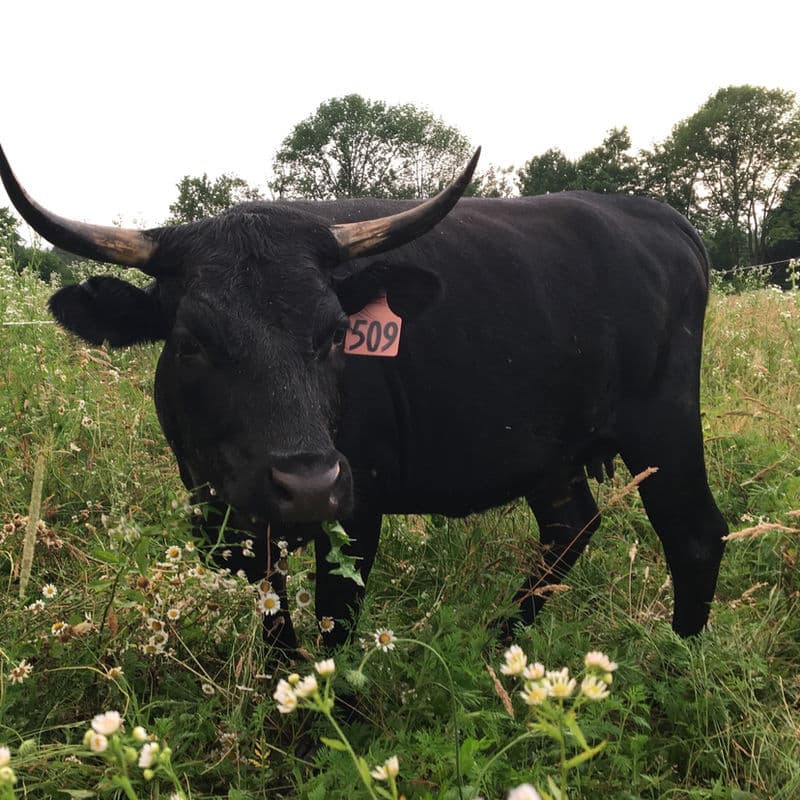

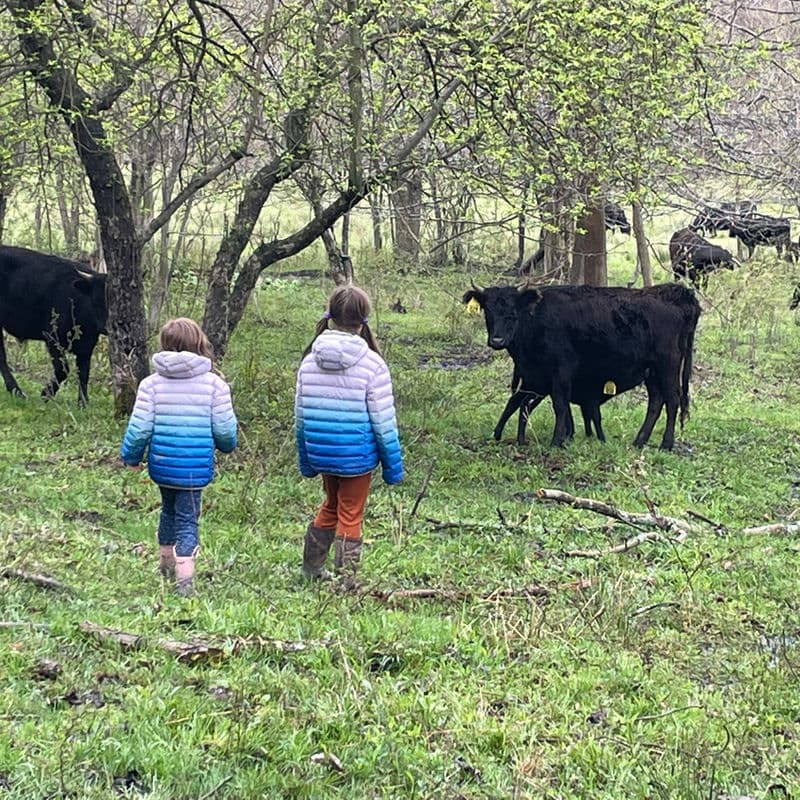
How We Practice It at Deer Run Acres
Regenerative agriculture is not just theory for us — it is the daily reality of how we manage our family farm in Edinboro, PA.
🐄 100% Grass-Fed Beef
Our cattle eat only grass and hay — never grain. They are moved to fresh pasture regularly through managed rotational grazing. No antibiotics, no hormones, no feedlots. The result is nutrient-dense beef raised entirely on what the land provides naturally.
🐖 Pasture-Raised Pork
Our pigs roam freely on pasture, rooting, grazing, and living as pigs were meant to live. They are supplemented with a non-GMO diet and play a critical role in soil aeration and nutrient cycling on our farm.
🐔 Pasture-Raised Eggs
Our diverse flock of laying hens has constant access to fresh pasture. They forage for insects, seeds, and greens — which is why our eggs have deep orange yolks packed with nutrition. The hens also serve as natural pest control, breaking parasite cycles behind the cattle.
🌱 No-Till Perennial Pasture
We never plow our pastures. Perennial grasses maintain living root systems year-round, protecting soil from erosion, feeding soil biology, and continuously sequestering carbon. The land improves naturally — no synthetic fertilizers, herbicides, or pesticides needed.
“Creation is the primary and most perfect revelation of the Divine.”
— Thomas Aquinas
We believe God's creation speaks for itself. Our job as farmers is not to dominate or control the land, but to steward it — to work alongside the natural systems He designed and leave the land better than we found it. That is the heart of regenerative agriculture.
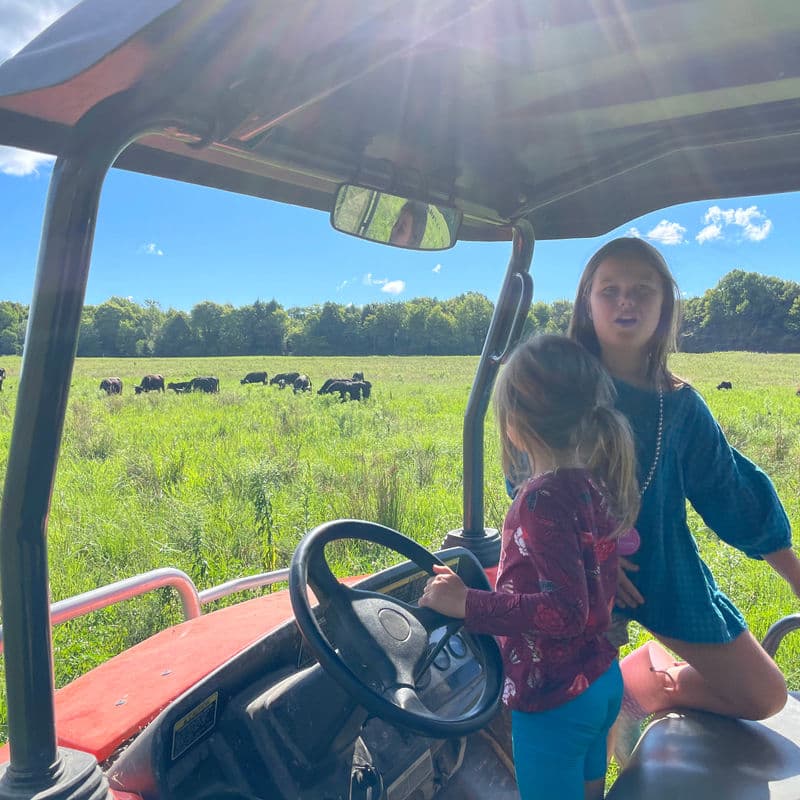
Why It Matters for Your Family
When you buy from a regenerative farm, you are not just getting healthier food — you are supporting a system that heals the land, cleans the water, and builds a better future for the next generation.
Nutrient-dense food from healthy soil and healthy animals
No antibiotics, hormones, chemical fertilizers, or pesticides
Your purchase directly supports local land stewardship
Carbon-negative farming that improves the environment
Animals raised humanely on open pasture — as nature intended
A family farm investing in the health of the next generation
Visit the Farm
See regenerative agriculture in action. Schedule a farm tour and walk the pastures with us. Meet the animals, see the soil, and experience firsthand how we are building something different.
View Workshops & ToursRegenerative Consulting
Interested in transitioning your land to regenerative practices? We offer one-on-one consulting to help farmers, landowners, and homesteaders implement rotational grazing and regenerative land management.
Sessions can be held at your farm or ours.