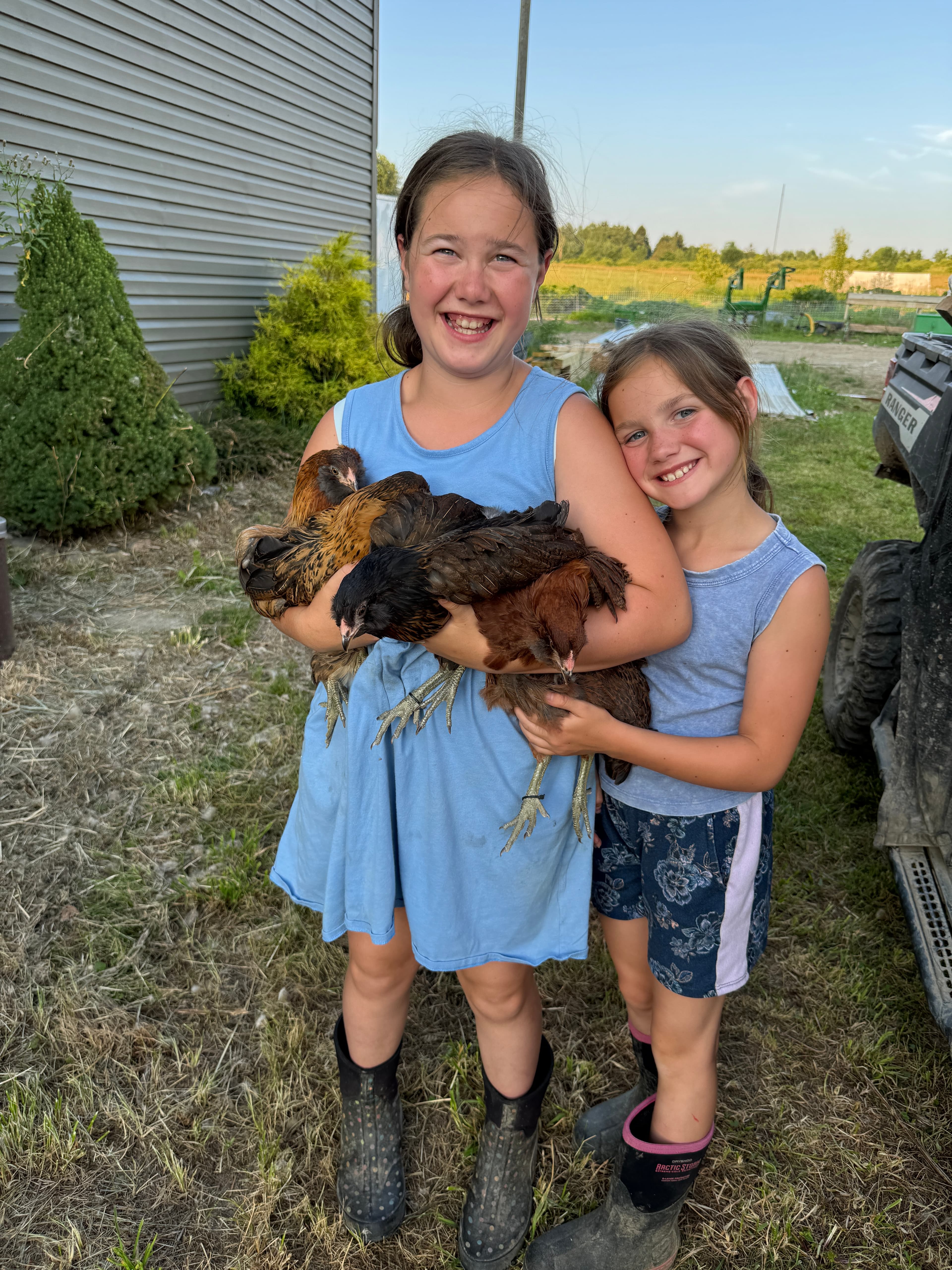

At Deer Run Acres, "pasture-raised" isn't a label we reach for — it's how our hens actually live. Through every season, including a northwestern Pennsylvania winter, our hens stay outdoors on living ground, in natural daylight and fresh air. Here's exactly how that works, and why it matters for the eggs you eat.
The Egg Mobile — Rotational Grazing for Chickens
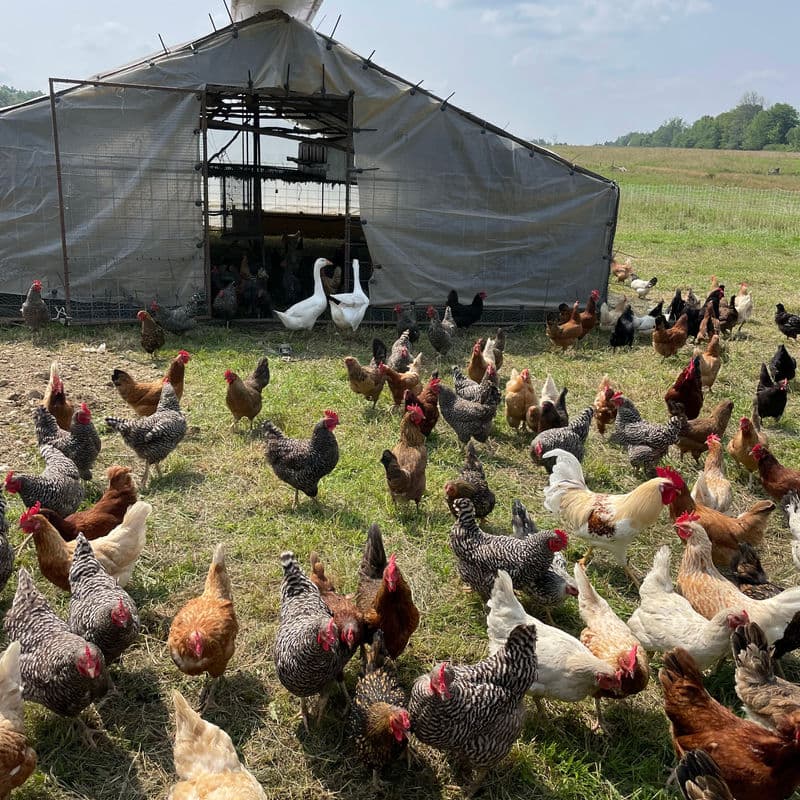
Through the growing season, our laying hens live in and around the Egg Mobile — a sturdy, steel-framed shelter with a permanent roof that we drag across the pasture onto fresh ground. Through the day they roam freely on open pasture — grazing grass, scratching for bugs and worms, dust-bathing in the sun. Moving the Egg Mobile onto fresh ground means the hens always have new pasture to forage, and the land behind them recovers while they fertilize the soil as they go. That's regenerative farming in practice — good for the birds and good for the ground. Their diet is grass, clover, insects, worms, and seeds straight off the pasture, rounded out with non-GMO supplemented feed so their nutrition is complete.
Winter — The High Tunnel
Pennsylvania winters bring snow, ice, and long stretches below freezing. A lot of farms answer that by closing their hens into sealed barns. We don't — and the honest picture of where they go instead is the whole point.
It's not a barn. The high tunnel has an earth floor — real ground, not concrete, steel, or gravel. Dig down through the bedding and there are worms in the soil, and the hens know it: they scratch and dig for them every day, the same instinct they follow on pasture.
They stay in daylight. The tunnel's cover filters the sun rather than shutting it out, so the hens live in natural daylight through the short winter days, with fresh air moving through. That daylight matters more than it sounds — it's where the vitamin D in the eggs comes from.
And they still get out. On snow-free days the hens range outside the tunnel onto open ground. We'll be honest about what that means in an Edinboro winter, though: from about December through April the green is gone, so there's little to truly forage. They scratch and roam the dormant ground when the weather allows, and come back to the tunnel's daylight and deep bedding the rest of the time.
Deep bedding. We build up deep bedding of straw and wood shavings over that earth floor. It composts down slowly, adding gentle warmth and keeping the space dry — and come spring it goes back to feeding the soil.
So the winter setup isn't a holding pen. It keeps the hens on living ground, in daylight and fresh air — outside when the weather allows, sheltered when it doesn't — doing what they do the rest of the year, just through the hardest stretch of the calendar.
What This Means for the Eggs
Real vitamin D. Just like us, a hen makes vitamin D when sunlight hits her — and she passes it straight into the egg. Hens that live in real sun, on pasture and in a daylight tunnel, lay eggs with several times the vitamin D of hens kept inside under lights. That's the one we'll always stand behind.
About yolk color. You'll often see a rich golden-orange yolk from a true forager, and it's a good sign. But we'll be straight with you: color alone doesn't prove anything. Anyone can deepen a yolk by mixing marigold or paprika into the feed, and plenty of "premium" brands do exactly that — hitting the same rich color in every carton. We don't, so ours isn't uniform: some days a yolk comes out pale, some days almost blood-orange. It just tracks whatever the hens were browsing that week, and that's always changing. The variation is the honest part — what's in your carton is the result of an outdoor life, not a color poured from a bag.
How We Compare to Industry Labels
"Cage-free" means the hens aren't in individual cages — but they're still kept indoors, usually in crowded barns, with no outdoor access required. "Free-range" requires only a door to the outside; the space beyond it can be small, and many hens never use it. "Pasture-raised" (certified) usually calls for 108 square feet of outdoor space per bird — a real step up, though many certified operations only provide it seasonally. Deer Run Acres keeps its hens on living ground year-round: rotated pasture through the growing season, the earth floor of the high tunnel through winter. Not a door they might use — the life they actually live.
Regenerative Farming — Beyond Just Eggs
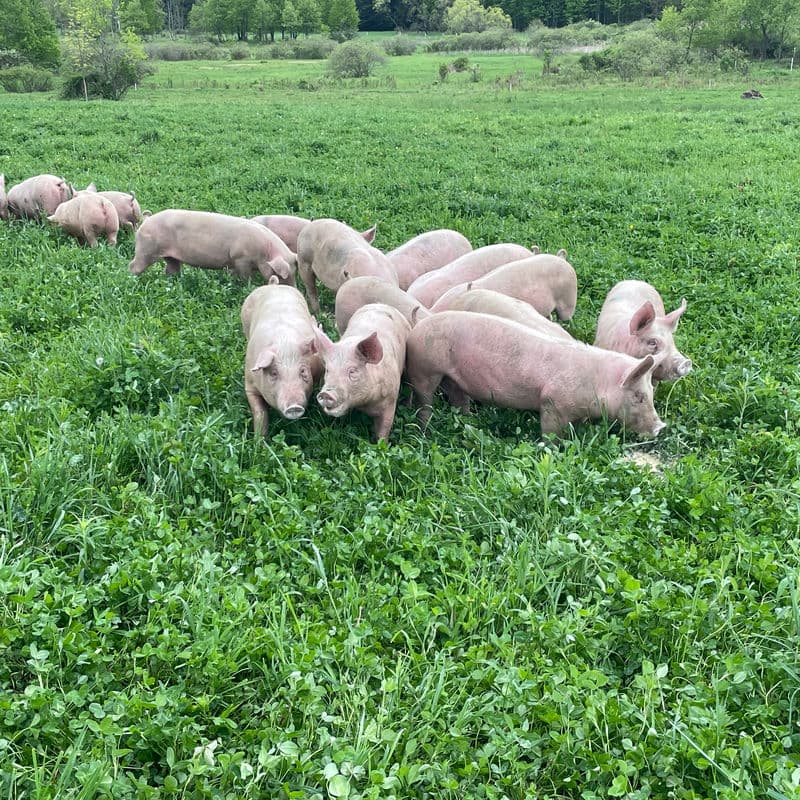
Our hens are part of a bigger system here. Rotated across pasture, they fertilize the soil naturally; their scratching breaks pest cycles and spreads nutrients across the land. It isn't only about good eggs — it's about building healthy soil and a farm that works with nature rather than against it.
We think you should know exactly how your food is raised. Eggs from Deer Run Acres come from hens living the life chickens are meant to live — on real ground, in real sun, every season of the year.
Caleb Schenk
Owner and farmer at Deer Run Acres, a regenerative family farm in Edinboro, PA producing the healthiest food through sustainable practices.